
01
IP cameras
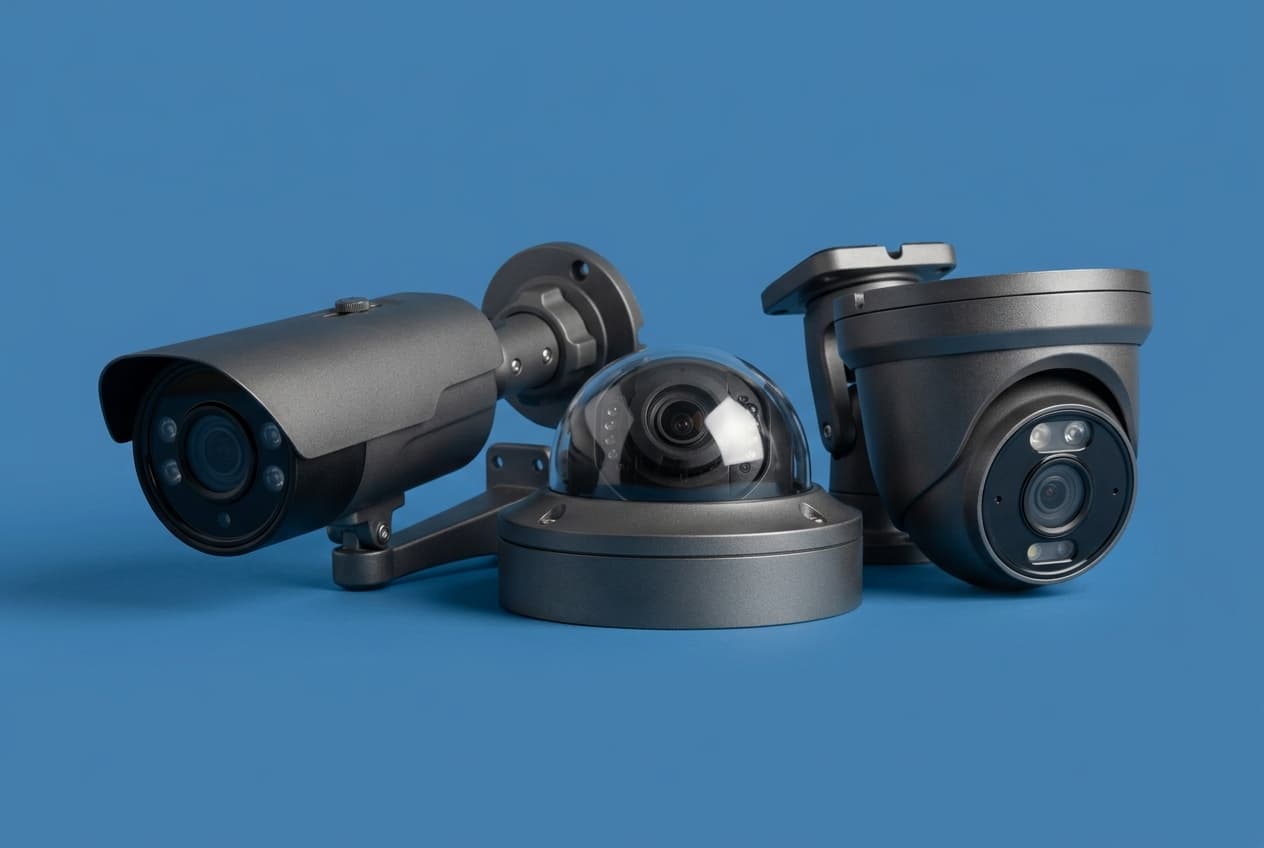
Fixed, dome, bullet and turret across resolutions. Specified by what you need to identify at what distance, which is what actually determines the lens.
IP cameras, NVRs, sensors and alarms: designed, installed and configured properly
Brands we source




Every camera position should answer a written question: what do we need to see here, and to what standard?
Assign one of those to each area first. The camera model, lens and mounting height all follow from it, and the count usually drops.
Thirty days of continuous recording on twenty 4MP cameras is a real amount of storage. Systems get sold with a recorder that cannot hold it, and the retention silently drops to whatever fits.
We calculate it from camera count, resolution, frame rate, codec and motion profile, then specify the recorder and drives against your stated retention. You get the arithmetic, not a promise.
A desktop hard drive expects bursts of activity and long idle periods. A camera system writes continuously, forever. Consumer drives in NVRs fail within months, usually silently, and you discover it when you need the footage.
The premium is small. We will not quote anything else.
Cameras go on their own VLAN with no route to your business network. It costs configuration time, nothing more, and it is the difference between a camera breach being a camera problem and a camera breach being a ledger problem.
Tell us this and the quote is right first time
The wrong question, and the reason most systems disappoint. The right one is what you need to be able to do with the footage. Recognising a person you already know needs far less pixel density than identifying a stranger, and reading a licence plate needs more again. We work backwards from that per area, and it usually means fewer cameras placed better rather than more placed conveniently.
Usually ordered alongside
Include lead times and warranty terms in your comparison — we put both on the page.