

01
Six sources, every ten minutes
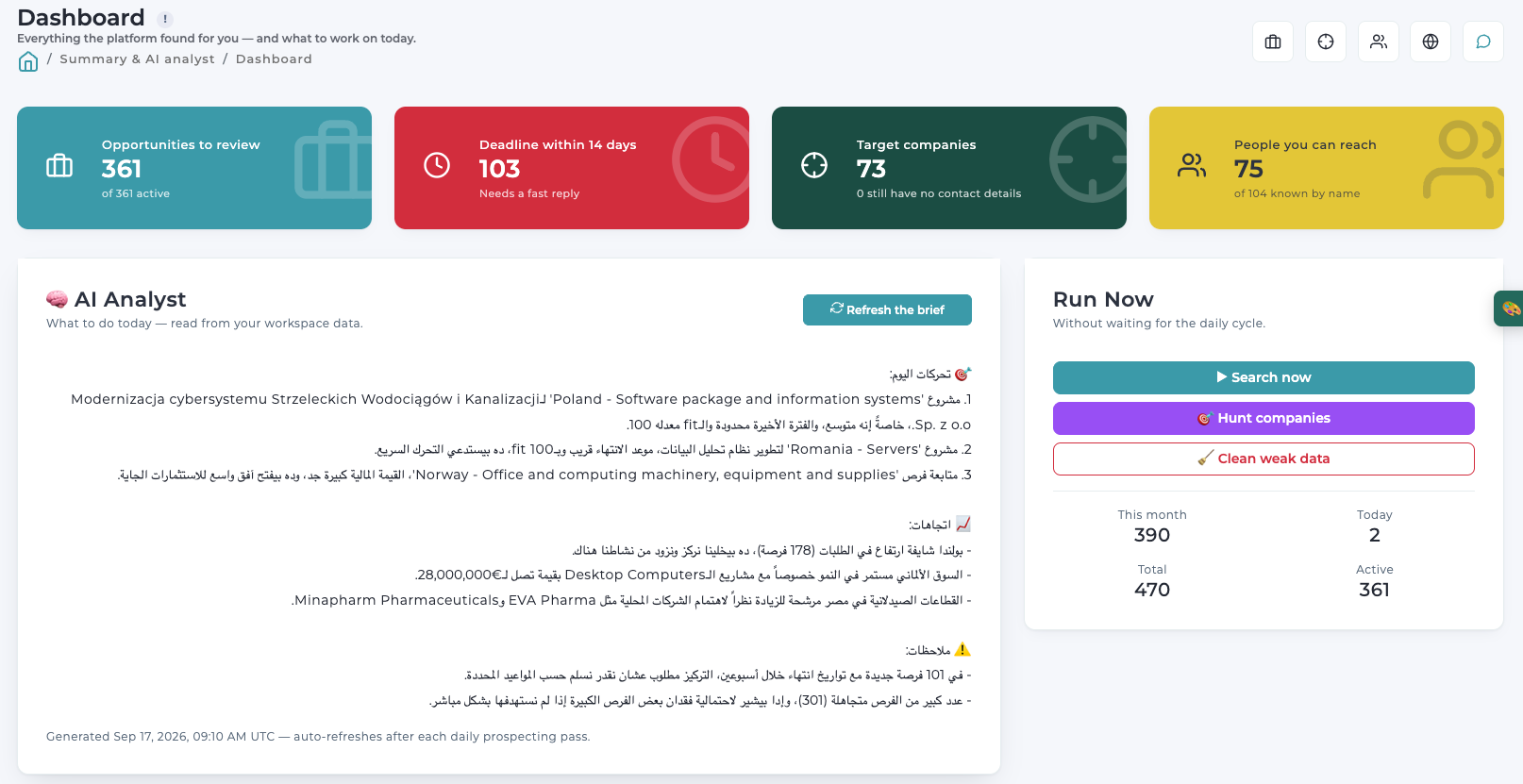
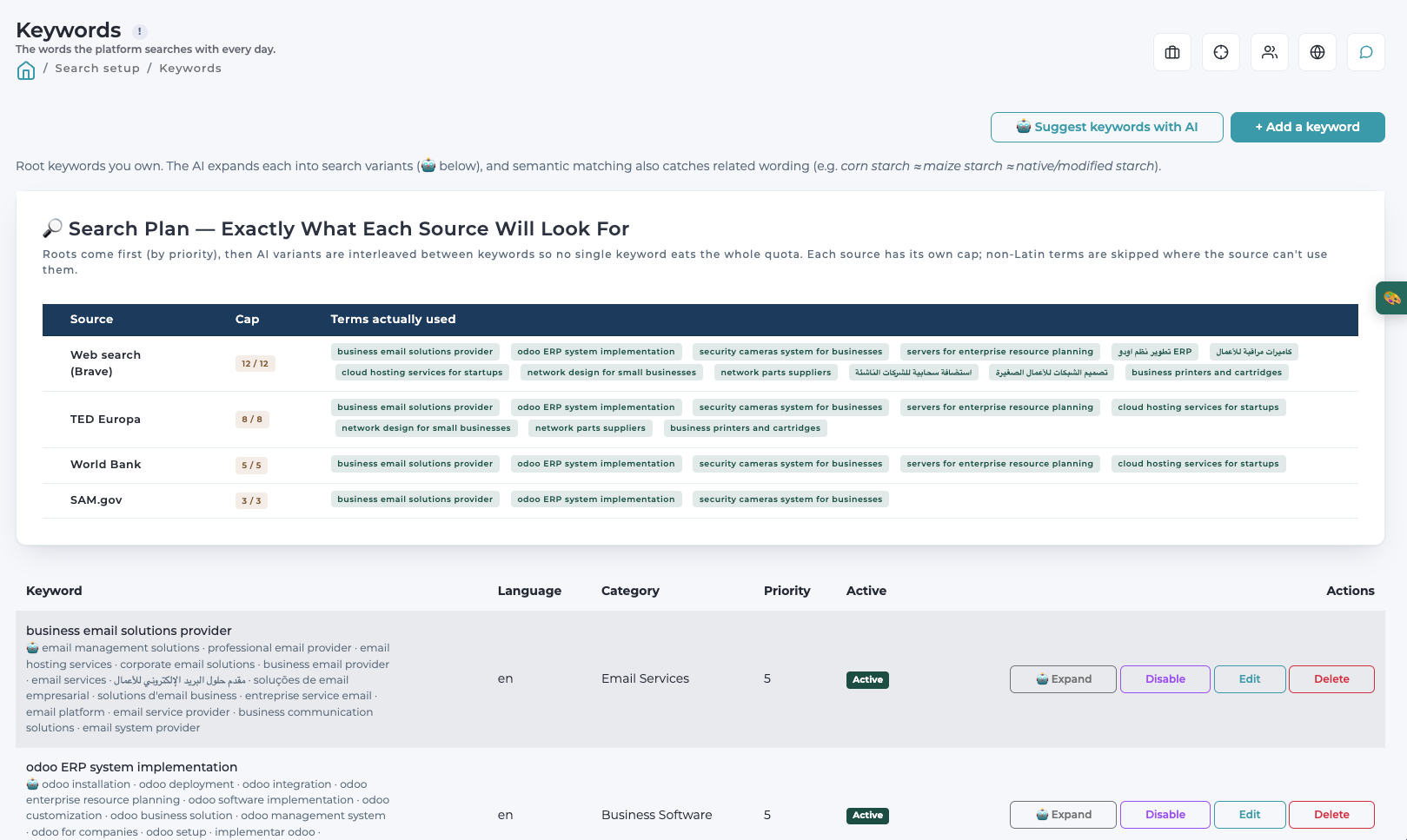
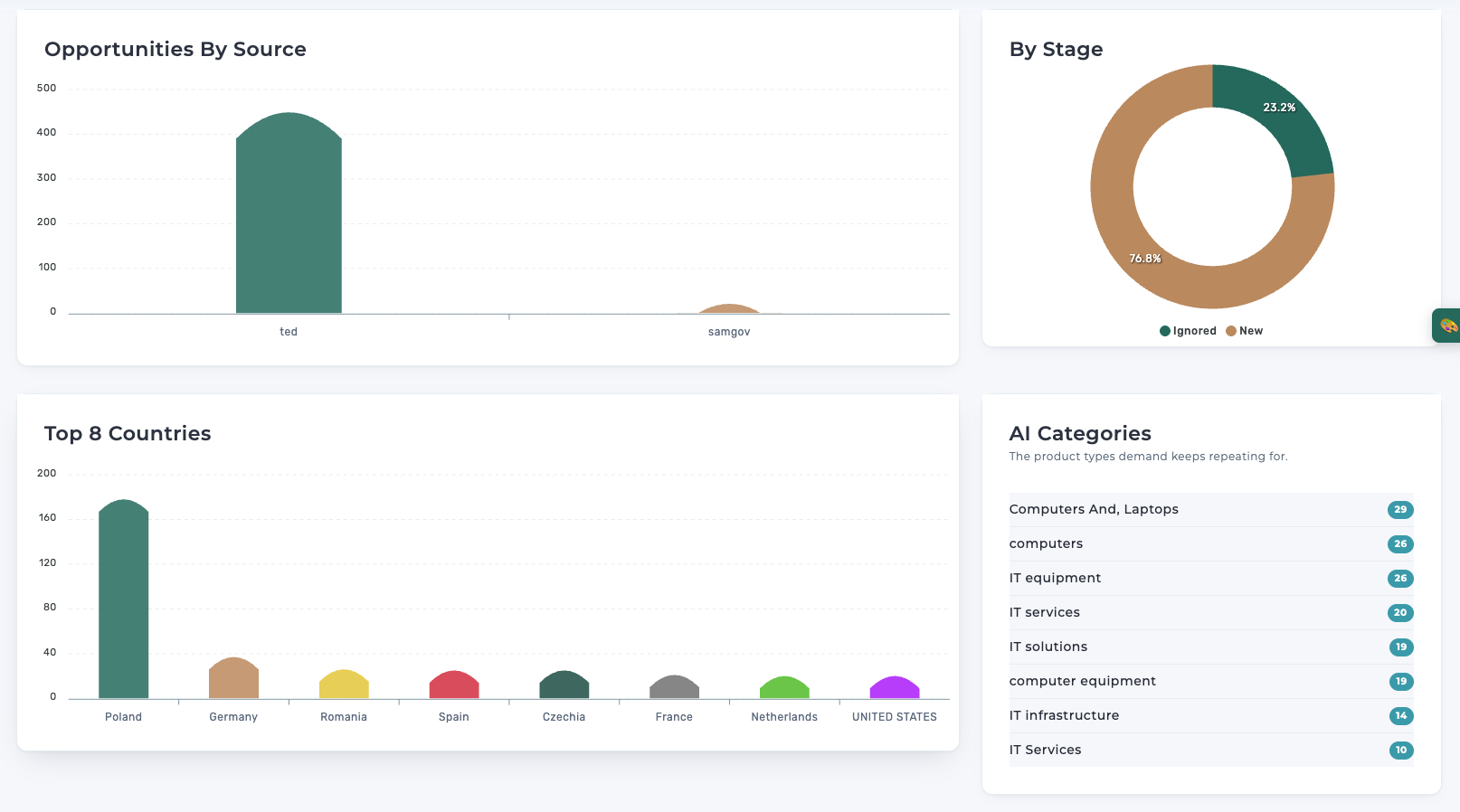
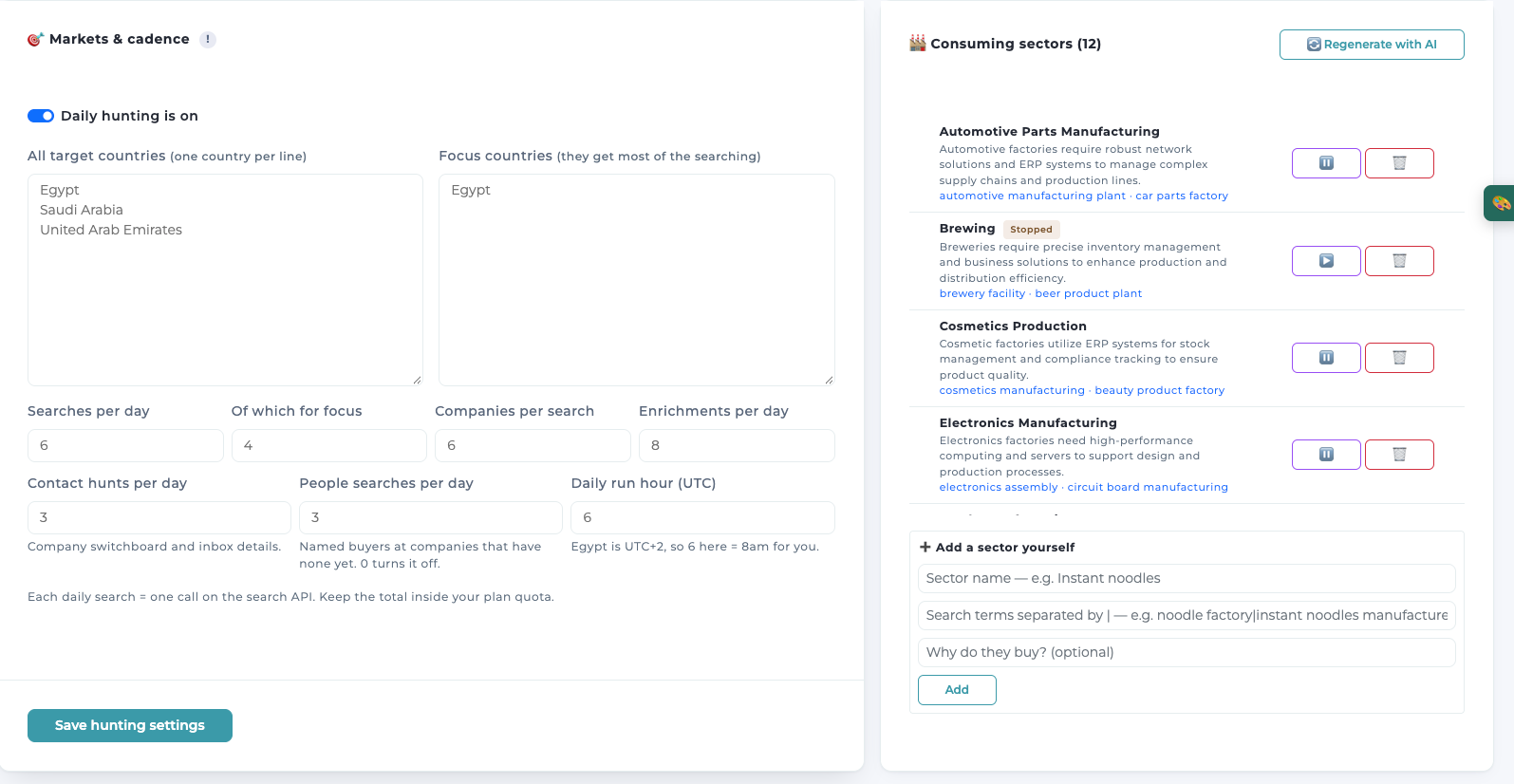
TED Europa, SAM.gov, the World Bank, eBay and the open web, searched on your keywords around the clock. Adding a new source is a small job, not a rebuild.
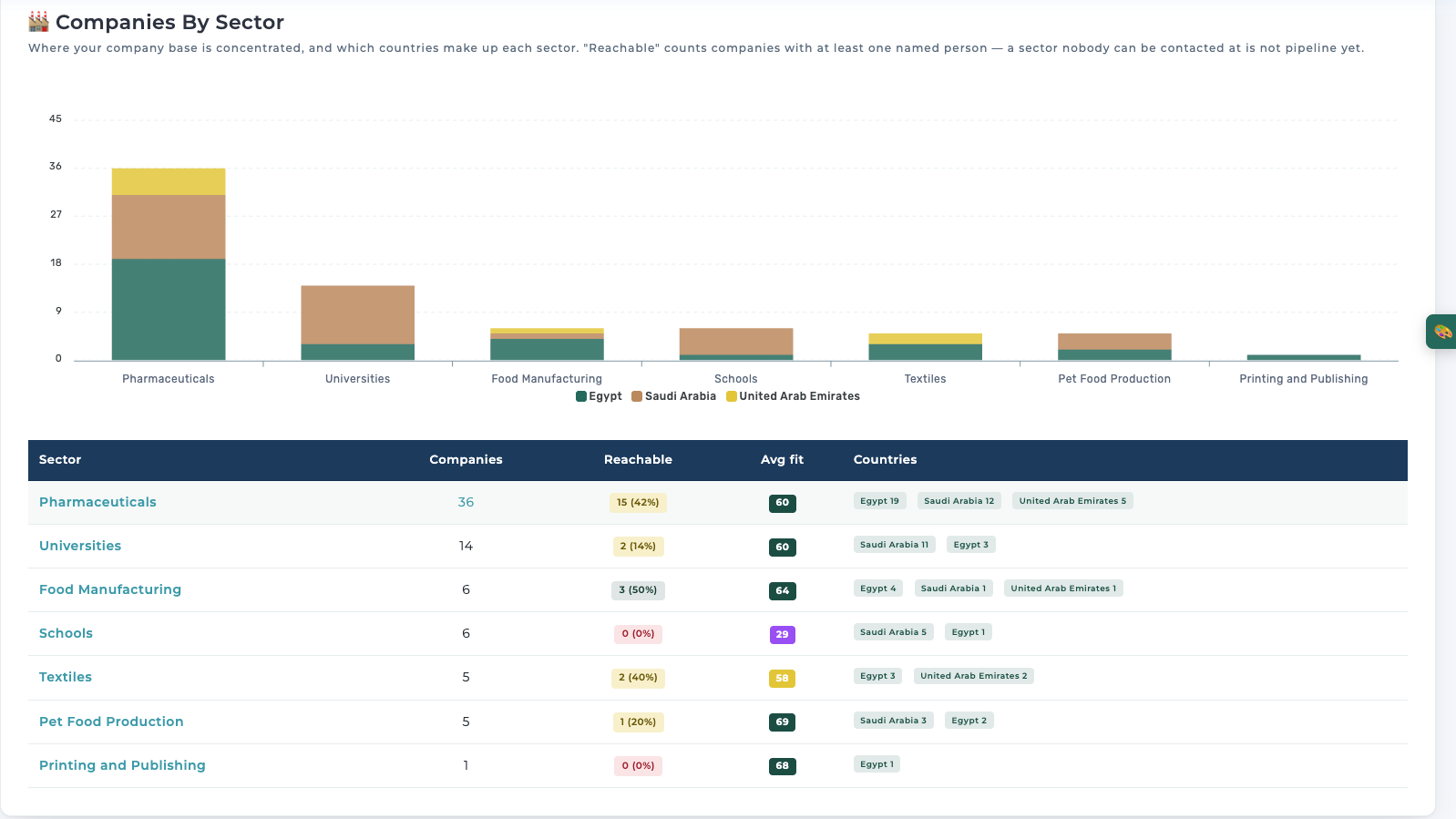
Finds tenders and export buyers every ten minutes, and gets you the name of the person who buys
At a glance
The fields and the rule are real. The two companies are invented, because naming a real rejected one would be unfair to it.

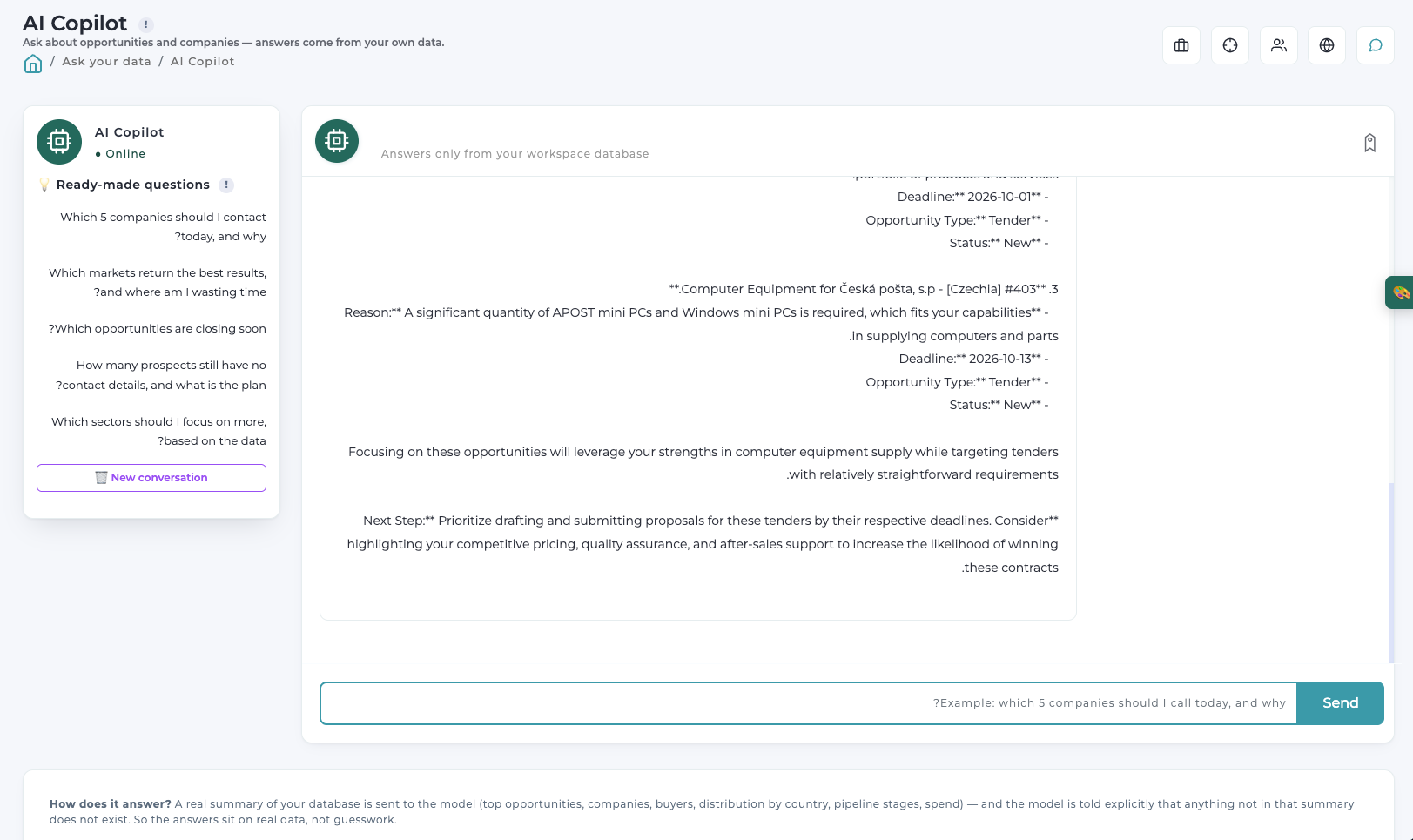
Ask an AI whether a big factory buys your product and it will nearly always say yes. Ask it about a cable maker and it will suggest they may use corn starch in their coatings. That is not a lead. It is the model being polite, and a sales team that chases a hundred of those stops trusting the tool.
So the rule is in the prompt: show the evidence, or it is a no. If the reasoning says may, might or could, there is no evidence. The company is marked not interested and hidden, and the reason stays visible so you can disagree with it.
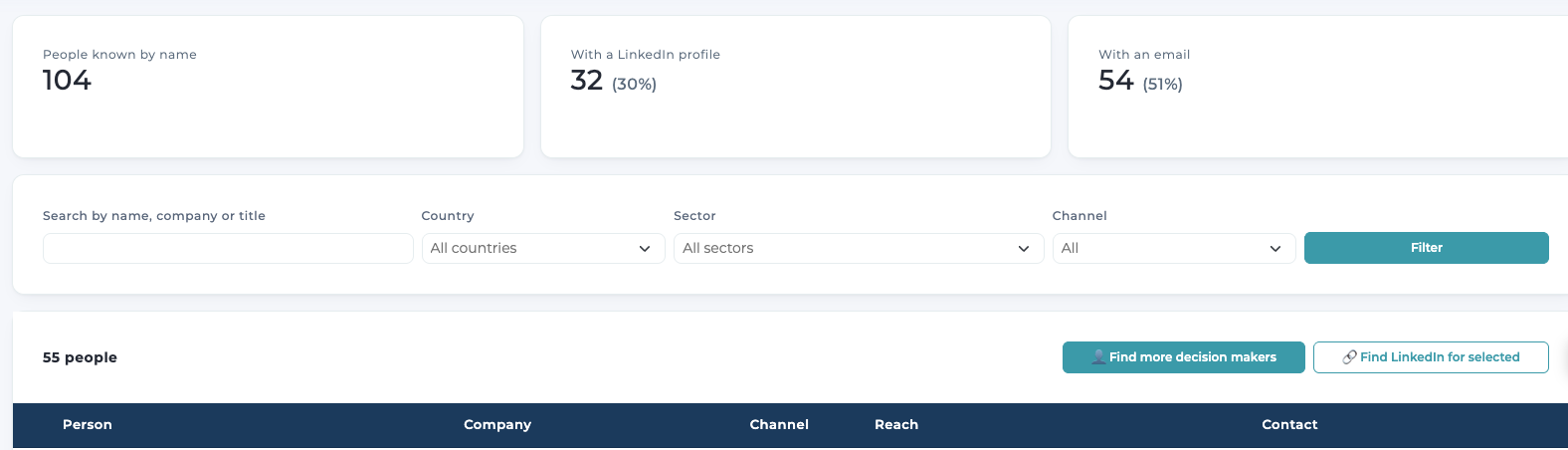
An info@ address is not a contact. The platform looks for the buyer on the company's own team and contact pages, and keeps a name only if it appears there word for word. When it knows the person but not their email, it builds one from the company's address pattern and marks it as a guess.
It checks that the domain accepts mail before anything goes out. It never probes a mailbox directly, because that is how a sending address ends up blacklisted.
A call, then a written recommendation. No obligation.